CAREER
I began my studies in Japan because my academic interests, my language development, and the opportunities available to me all pointed in exactly the same direction: to understand Japanese media and society from the inside, not from a distance.
Already as a master’s student at Palacký University Olomouc, I wasn’t approaching Japan as an abstract “culture,” but as a living communication system. I studied Japanese and German philology and wrote my MA thesis specifically on “Advertising in Japan,” which meant I was treating Japanese media—commercial imagery, beauty norms, desire, persuasion—as something that had to be read in its own cultural logic rather than filtered through Western theory.
This early decision to study Japan through its media environment shaped everything that followed, because it made clear that I cannot seriously analyze how messages work in Japan without being in Japan: who produces them, for whom, under what unspoken constraints, and through what institutional structures.
At the same time, I was investing heavily in language ability as an academic tool, not just as a hobby. I won first prize in the national Japanese Language Speech Contest in 2000, which signaled two things: first, that I could operate publicly in Japanese rather than study it passively; and second, that Japanese institutions and audiences would actually listen to me in their own language. That mattered. It meant I could plausibly participate, not just observe.
That credibility opened the first decisive door: I was awarded a Japanese Government (Monbukagakushō) scholarship and went to Tokyo Gakugei University in 2002–2003 for intensive training in Japanese language and culture as a sponsored research student. This was not tourism. It was a state-funded immersion designed to make me effective in Japanese academic and social settings. From that point on, Japan stopped being only my research subject and became my working environment. I began building everyday literacy: speaking to professors, reading newspapers and magazines, and paying attention to tone, hierarchy, politeness strategies, and coded evasions in public speech. That last part—how people talk around sensitive topics—would later become central to my work on scandal.
My trajectory after that shows that “why Japan?” quickly turned into “there is no other place I can do this level of work.” I completed a PhD in Media Studies at Charles University in Prague in 2009 with a dissertation on “Media and Society in Japan,” which already treated Japan not as a case study but as a system with its own media-political logic. I then deepened that focus by returning to Japanese academia itself. I received another Monbukagakushō scholarship in 2008 and entered the University of Tokyo, first as a foreign research student and ultimately as a doctoral candidate in Interdisciplinary Information Studies (IT ASIA).
In parallel, I was already professionally embedded in Japan. I worked in translation and interpreting between Japanese, English, and Czech in industrial and corporate settings (e.g. Toyota), which trained me to hear the fine-grained differences between what is said and what is meant in Japanese corporate communication. Later, I taught courses such as “Contemporary Japan” at Tokyo Metropolitan University and engaged with Japanese institutions as a lecturer and researcher. That experience matters for explaining motivation: being on the inside showed me how scandal, apology, loyalty, and institutional repair are lived—not theorized from afar, lived.
BUSINESS
My signature field is the study of scandal in Japan: how wrongdoing is exposed, staged, moralized, and then socially processed. I analyze scandal not just as “bad behavior made public,” but as a structured performance with prescribed roles, rituals of apology, and attempts at reintegration.
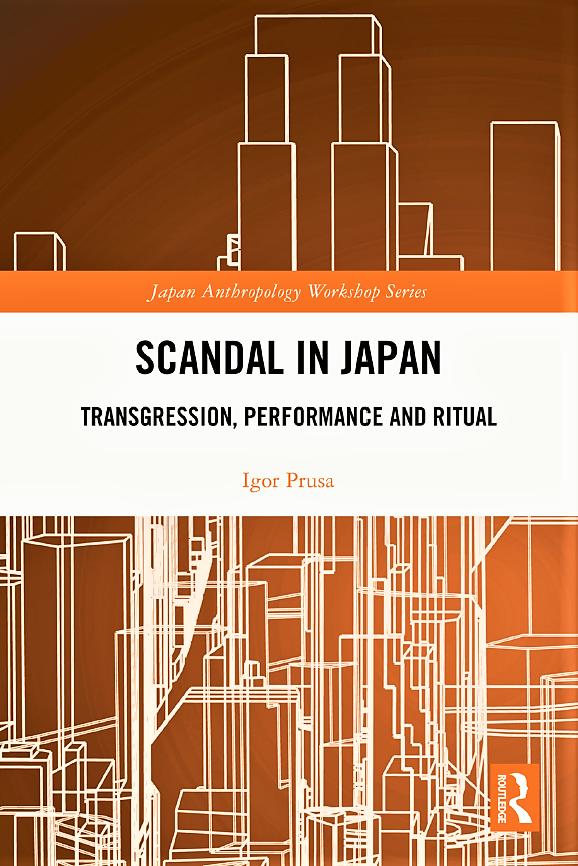
This is the core of my Ph.D. from the University of Tokyo, “Scandal, Ritual and Media in Postwar Japan” (2017), and my book “Scandal in Japan: Transgression, Performance and Ritual” (2023). Further, I wrote multiple peer-reviewed articles, including work on corporate scandals (Olympus), political scandals (Ozawa Ichirō), and celebrity scandals (Sakai Noriko).
Recently, I analyzed the LDP slush fund scandal and the Fuji TV sexual assault scandal, including how broadcasters, advertisers, shareholders, and the press negotiate responsibility under public pressure.
Across these works, I argue that scandal in Japan acts like a secular ritual: it punishes, purifies, and re-stabilizes institutions. I also show that scandal is produced — it is manufactured, amplified, or suppressed by media logics, not simply “discovered.”
A second strand of my research focus is Japanese political communication. I study how political elites, parties, television, and print media interact, how they trade access for narrative framing, and how scandals become weapons inside that system.
This includes: 1) the mechanics of political scandal involving illicit funding and corruption networks, 2) work on digital media and political marketing in Japan, and 3) analysis of the “mediopolitical complex” and “press club” culture (kisha kurabu) — that tight space where Japanese journalism, bureaucracy, and party politics meet and mutually manage what becomes public.
A lot of this work is not just descriptive; it’s critical. I am interested in accountability: who actually gets exposed, who is protected, and why.
In my work I consistently treat public communication in Japan as “ritual” and “performance.” That includes the choreography of apology press conferences, the role of bows, tears, “stepping down,” and staged remorse. I read these not as PR details but as culturally intelligible rituals that both satisfy and manage public anger. That’s important: my research is not built purely on translated sources or secondhand reporting. It’s built on watching how Japanese media, politicians, entertainers, and institutions actually behave under pressure — in real time, in their own language.
“Scandal in Japan”
VISION
My future research vision, based on what I’ve already built, naturally moves in four connected directions. All four are already visible in my publications, talks, and teaching profile, so they’re not speculative — they’re the next logical expansion of what I am doing now.
1. Institutional accountability in Japan: from scandal-as-ritual to scandal-as-pressure
My work so far shows how scandal in Japan functions like a ritual: wrongdoing is narrated, guilt is staged, apology is performed, and the system returns to equilibrium with minimal structural change. My forward direction is to keep tracking when that ritual breaks. The long-term project here is to map the conditions under which scandal in Japan stops being “ritualized spectacle” and becomes an instrument of actual reform. That moves my work from describing scandal to theorizing scandal as a mechanism of modern accountability in Japan’s political and media systems. In practice, this means: a) following political finance scandals, b) following media/entertainment industry abuse cases, and 3) following how corporate and political actors try to survive them.
2. Victimhood performance and the “fallen hero” narrative
I am already publishing on how embattled political figures recast themselves as persecuted heroes, victims of conspiracies, or targets of “witch hunts,” and how they stage their own suffering as proof of virtue. I describe this as the emotional construction of victimhood and as the “fallen hero” storyline in contemporary politics. Besides, I’ve already written on “antiheroism” — including how public figures are reframed as charismatic transgressors, not villains — and I’ve spoken internationally about how scandal, charisma, and suffering get braided together.
3. Media ecologies, from press clubs to platform publics
I work on how Japanese media, politics, and business are entangled — the “mediopolitical complex”: controlled access, routinized leaking, managed outrage, and the performance of scandal for television and print. I’ve also lectured on political communication and digital media in Japan, and I taught scandal in Japan at the University of Vienna, which signals that this is becoming part of my core teaching identity, not just a niche article. This directly links to my recent work engaging both Japanese audiences (talks in Tokyo’s Foreign Correspondents’ Club of Japan) and European/North American audiences at conferences (talks in Cambridge, Zurich, Toronto).
4. Cultural industry, gender, and harm
My publication record links scandal analysis with work on celebrity culture, idol production, and the management of cuteness (kawaii), desirability, and obedience in Japanese pop industries. I’ve presented and published on cuteness as a mode of power, and on celebrity collapse as a kind of moral theatre. This is moving toward a very current line: gendered vulnerability inside Japanese media institutions. Further, I am already writing about cases where harassment, abuse, or sexual exploitation inside broadcasters, talent agencies, and political machines is no longer being treated as “internal business,” but as a structural liability with consequences for corporate legitimacy and investor value (see my case study on the Fuji TV sex assault scandal from 2024). The future here is to connect: 1) how women are positioned, aestheticized, and instrumentalized in media industries; 2) how they are exposed to harm; 3) how that harm becomes visible through scandal; and 4) how institutions ritualize that harm away without admitting systemic abuse.
To conclude, my vision for the future is not “more Japanology in general.” It’s a research program on how modern Japanese power performs accountability, resists it, narrates itself as the victim, and increasingly fails to keep those performances sealed inside Japan.
Lastly, I hope to connect with the following kinds of people as well.
1. Japanese media/press ecosystemSince I study how scandal is staged, contained, leaked, and ritualized, I need people who live that process:
1) Mainstream TV/newspaper journalists (especially reporters who cover politics, corporate misconduct, and talent agencies).
2) Tabloid / weekly magazine journalists (as they are often first movers in sex/harassment, finance, and celebrity scandals).
3) Foreign correspondents in Tokyo (these correspondents are increasingly the channel through which Japanese scandals become global)2. Political communication/governance scholars
I am moving toward scandal as a tool of governance/accountability in Japan,” which is why I’d like to connect with:
1) Japanese political communication & corruption researchers (scholars who study party finance, factional competition, and how funding scandals are managed).
2) Policy/compliance/governance researchers in Japan’s corporate world (especially people who study boards, shareholder activism, and third-party committees).
3) political scientists and sociologists of Japanese institutions (people who watch the uneasy marriage of media, bureaucracy, and party power).3. Gendered labor/harassment accountability actors
I am clearly moving into the question of structural harm in media institutions (sexual violence, power harassment, agency abuse, etc.). That’s not just media studies — that’s labor and gendered power. Thus, I should be talking to:
1) Lawyers and legal advocates involved in workplace harassment/assault cases in Japan,
2) Women’s rights/workplace equity NGOs and academic gender studies researchers, and
3) scholars of Japanese popular culture and gendered representation (idol systems, kawaii, female announcer culture as soft capital).To conclude, that combination — Japanese media insiders + gendered harm advocates + corporate governance experts — will help me outline my future career. Owing to this, I’ll have credibility in Japan, theoretical reach outside Japan, and relevance in conversations about accountability, not just culture.
PROFILE
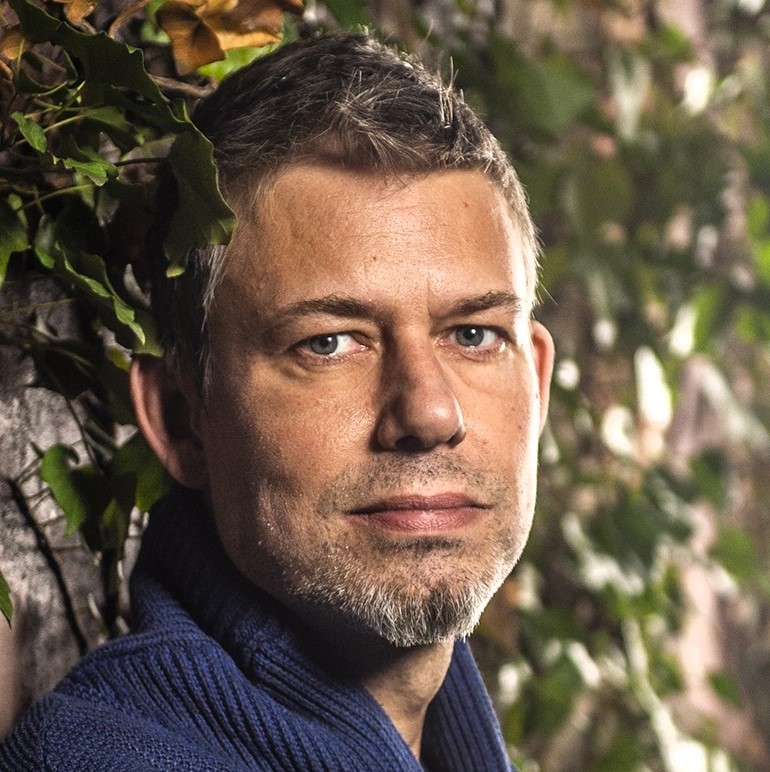
Igor Prusa (born 1979) is a Czech scholar in Japanese studies and media studies, currently affiliated with Ambis University Prague and Metropolitan University Prague. He worked at the Czech Academy of Sciences and taught at the University of Vienna, the University of Zurich, and Tokyo Metropolitan University. Prusa received his first PhD in media studies at Prague’s Charles University in 2010. In 2017, he defended his second doctoral thesis at the University of Tokyo. His research interests include Japanese culture and society, media scandals, and anti-heroism in popular fiction. His research has appeared in a wide range of publications, including Media, Culture & Society and Japan Focus. His debut book, "Scandal in Japan: Transgression, Performance and Ritual," was published by Routledge in 2024. Apart from his academic activities, Igor Prusa is a guitarist and music composer in a Japan-themed band, Nantokanaru
Nationality: Czech
Home town name: Brno
College name: Metropolitan University Prague
▼ Website
https://www.mup.cz/en
▼LinkedIN:
https://www.linkedin.com/in/igor-prusa-ph-d-et-ph-d-8751a17b/
▼ Facebook
https://www.facebook.com/igor.prusa/
▼ Academia.edu
https://mup.academia.edu/IgorPrusa
▼ Researchgate
https://www.researchgate.net/profile/Igor-Prusa
▼Instagram
https://www.instagram.com/igorprusa/
